 IELTS
IELTS Academic vs General Training
Compare IELTS Academic and General Training: purpose, Listening, Reading, Writing and Speaking, and how to choose the right test.
Read guide →A one-to-three-month IELTS study plan should begin with an assessment of Listening, Reading, Writing and Speaking. Use the results to set realistic priorities, practice sessions and targets before your test deadline. Adapt the workload to the time you can devote to preparation.
At a glance
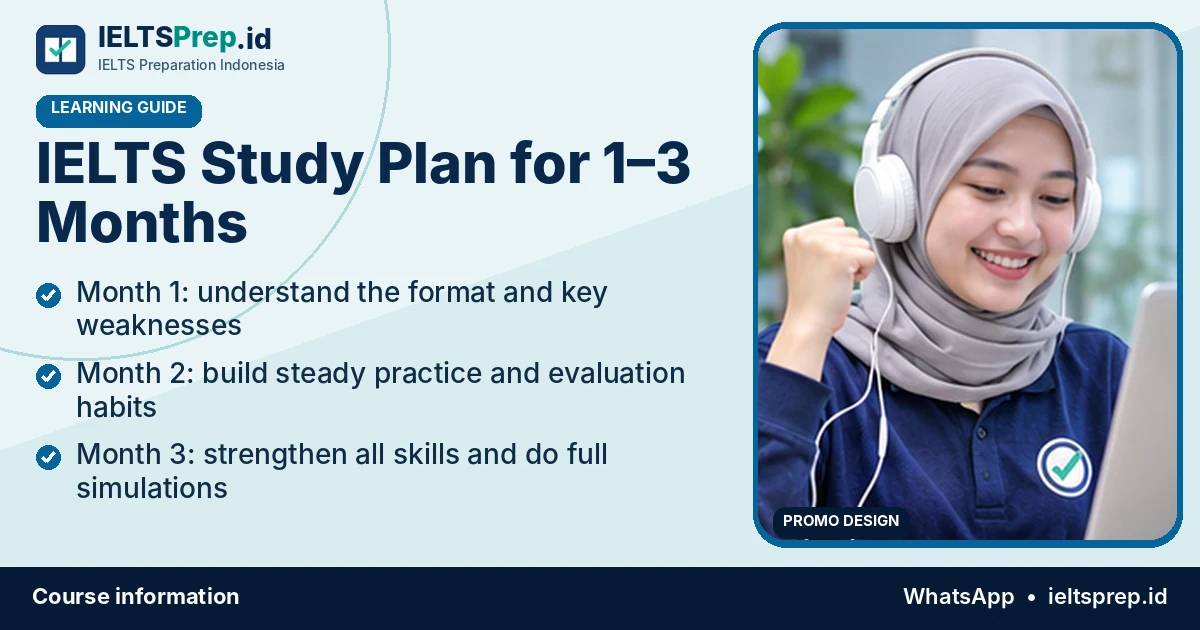
Start by assessing your current ability and allocating time to practice each week. Evaluate results regularly to keep your plan realistic.
Practise all four skills and record difficulties. Distinguish language problems from unfamiliarity with question formats. Set a target based on your institution's requirements rather than a single number for everyone.
Week one focuses on diagnosis and Listening; week two on Reading; week three on Writing; week four on Speaking and simulation. Include short practice sessions for other skills every week.
In month one, strengthen foundations and understand the format. In month two, complete measurable exercises and revise responses using feedback. In month three, prioritise weaknesses and timed simulations. Reschedule the test if you are not ready.
Record types of errors, revise written answers and record Speaking practice to track progress. Use official IELTS preparation materials.
Start with 30–60 minutes per day, depending on your availability. Use two sessions for Listening and Reading, two for Writing and Speaking, and one for error review. Allow time for writing revision and extra practice in your weakest skill. This is an example of independent study, not the number of course meetings.
Track Reading and Listening accuracy, completion of Writing tasks within time limits, and Speaking fluency. Compare practice of similar type and difficulty. If basic instructions remain difficult, allow more foundation study before intensive simulations. Use official Academic sample questions or General Training sample questions as appropriate.
An effective study plan needs an error log, not just a list of completed exercises. When an answer is wrong, check whether the problem was vocabulary, instructions or understanding the passage. Choose the next exercise according to that cause so your time is well spent.
For Reading, highlight the part of the text supporting the correct answer. For Listening, replay the audio and identify previously missed information. This helps you understand your reasoning rather than memorise answer keys.
Choose a Writing task matching your test type. Read the question, plan your ideas and write independently. When finished, check that every part of the task receives a relevant response.
Use feedback to identify one or two improvements. For example, focus on links between paragraphs before replacing all your vocabulary. Rewrite problematic passages to apply the advice rather than simply read it.
Answer different topics in your own words. Record a short response and identify unclear sections. Answer the question again using different sentence structures so you do not depend on memorisation.
If you have a study partner, ask each other questions and exchange feedback in short sessions. Check whether you can explain your reasoning when asked a follow-up question. This helps develop flexible communication.
For one-month preparation, focus on weaknesses that most affect readiness. Avoid working through an entire book without a purpose. Use measurable practice and set aside time to review the results.
Three months offers more room to build foundations and repeat evaluations. However, duration alone does not determine success. Record changes each week and adjust intensity according to actual progress.
If you work or study, select hours you can maintain. Online IELTS classes offer evening Zoom sessions, while face-to-face IELTS classes in Pare suit learners seeking a focused learning environment.
Before choosing a test date, check your target overall band and minimum component scores. Adapt your plan to your starting ability, institutional requirements and practice results. If you need more time, revise your strategy rather than treating the original plan as a score guarantee.
Choose a class that fits your starting level and schedule. Compare learning formats before registering.
Continue with a guide that answers your next question.
Compare IELTS Academic and General Training: purpose, Listening, Reading, Writing and Speaking, and how to choose the right test.
Read guide →
Check overall and component requirements, deadlines and accepted test formats.
Read guide →
Learn how mock tests, placement tests and scoring tests support IELTS preparation and how to review results across all four skills.
Read guide →
Plan IELTS preparation for Australia’s Work and Holiday visa, check official English evidence requirements and choose a suitable learning route.
Read guide →
Learn how to choose IELTS Academic or General Training, find an official test centre, book a date, pay and access results.
Read guide →